Structural Dynamics and Physicochemical Assessment of Complex Molecular Systems
Exploring Molecular Architecture, Structural Transformations and Physicochemical Behavior
The investigation of complex molecular systems requires a comprehensive understanding of the relationships between molecular architecture, structural organization, and physicochemical properties. Chemical and biological molecules are dynamic entities whose behavior depends on their composition, intermolecular interactions, surrounding environment, and experimental conditions.
Structural dynamics examines how molecular configurations evolve over time and how different physical and chemical factors influence their organization. Physicochemical assessment complements these investigations by evaluating measurable properties such as molecular stability, solubility, polarity, thermal behavior, diffusion, and chemical reactivity.
The integration of these two research dimensions provides valuable information about molecular organization and the mechanisms governing structural transformations. Through advanced analytical methodologies, experimental measurements, and computational approaches, researchers can investigate molecular systems at different levels of complexity.
This scientific approach contributes to the characterization of chemical compounds, the understanding of biomolecular interactions, and the investigation of advanced materials.

1. Molecular Architecture and Structural Organization
Molecular architecture describes the arrangement of atoms, chemical bonds, and functional groups within a molecular structure. This organization determines many of the physicochemical characteristics of a compound and influences its interactions with surrounding molecules.
The investigation of molecular architecture involves several structural dimensions:
Primary molecular composition and atomic connectivity.
Three-dimensional molecular configuration.
Functional group distribution.
Bond lengths and bond angles.
Molecular symmetry and conformational organization.
Intramolecular and intermolecular interactions.
Electronic distribution and molecular polarity.
The spatial arrangement of atoms is particularly important because molecules with similar chemical compositions may exhibit different properties when their structural configurations differ.
Structural characterization therefore requires analytical approaches capable of investigating both molecular composition and three-dimensional organization.
2. Structural Dynamics and Molecular Conformational Changes
Molecular structures are not necessarily rigid. Many chemical and biological molecules undergo continuous conformational changes in response to their surrounding environment.
These structural variations may result from changes in temperature, pressure, solvent composition, pH, or interactions with other molecular components.
Conformational dynamics involves the transitions between different spatial arrangements without necessarily changing the fundamental chemical connectivity of a molecule.
Important mechanisms include:
Rotation around chemical bonds.
Changes in torsional angles.
Molecular folding and unfolding.
Conformational rearrangements.
Intramolecular hydrogen bonding.
Formation and dissociation of molecular complexes.
These processes influence molecular accessibility, structural stability, and interaction capabilities.
Understanding conformational dynamics is particularly relevant when investigating proteins, nucleic acids, polymers, and other structurally complex molecular systems.
3. Physicochemical Properties of Molecular Systems
Physicochemical characterization involves the evaluation of measurable properties that describe how molecules behave under specific physical and chemical conditions.
These properties provide essential information for understanding molecular stability, solubility, reactivity, and interactions.
Molecular Weight and Composition
Molecular weight provides information about the overall mass of a molecule and contributes to the interpretation of its chemical and physical behavior.
Molecular composition additionally identifies the types and proportions of atoms present within a chemical structure.
Polarity and Molecular Distribution
Molecular polarity results from the distribution of electrical charges within a molecule.
It influences interactions with solvents, other molecules, and surrounding chemical environments.
Solubility and Dissolution Behavior
Solubility describes the capacity of a substance to dissolve in a particular solvent under defined conditions.
It depends on several factors, including molecular structure, intermolecular interactions, temperature, and solvent characteristics.
Thermal Properties
Thermal behavior provides information about how molecular systems respond to temperature variations.
Investigations may include melting transitions, thermal decomposition, glass transitions, and changes in structural organization.
Chemical Stability
Chemical stability refers to the ability of a substance to maintain its chemical identity under specified conditions.
Environmental exposure, oxidation, hydrolysis, and temperature variations may influence molecular integrity.
4. Molecular Interactions and Structural Stability
Molecular interactions play an essential role in determining the organization and stability of complex chemical systems.
These interactions influence molecular association, structural organization, solubility, and the formation of larger molecular assemblies.
Several interaction mechanisms are particularly important.
Hydrogen Bonding
Hydrogen bonds contribute to molecular recognition, structural organization, and the stabilization of different molecular conformations.
They are particularly important in proteins, nucleic acids, and supramolecular structures.
Electrostatic Interactions
Electrostatic forces arise from interactions between charged or partially charged molecular regions.
Their influence depends on charge distribution, molecular distance, and the surrounding dielectric environment.
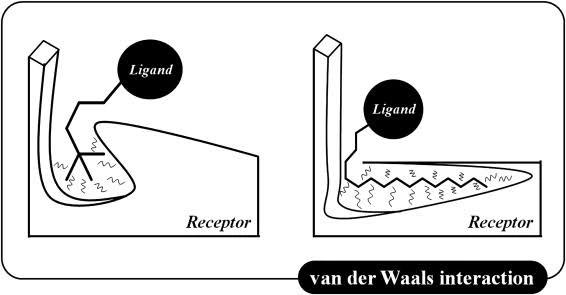
Van der Waals Interactions
These interactions result from temporary or induced variations in electronic distribution and contribute to molecular association and structural organization.
Hydrophobic Interactions
Hydrophobic effects influence the organization of nonpolar molecular groups in aqueous environments.
They contribute to the folding and assembly of several biological macromolecules.
Aromatic Interactions
Interactions involving aromatic molecular systems can influence molecular recognition, stacking arrangements, and structural stability.
The combined contribution of these mechanisms determines the behavior of many complex molecular systems.
5. Thermodynamic Principles and Molecular Equilibrium
Thermodynamics provides a fundamental framework for understanding molecular stability and the conditions governing chemical and physical transformations.
The thermodynamic properties of a molecular system describe the energetic relationships associated with its structural organization and interactions.
Important parameters include:
Enthalpy.
Entropy.
Gibbs free energy.
Heat capacity.
Equilibrium constants.
Temperature-dependent energetic changes.
6. Molecular Dynamics and Computational Investigation
Computational molecular dynamics provides a method for examining molecular movements and structural changes over time.
These simulations use mathematical models and physical principles to describe the evolution of molecular systems.
They can provide information about molecular trajectories, conformational changes, and interactions that may be difficult to observe directly through experimental measurements.
Molecular dynamics investigations may include:
Atomic displacement and molecular motion.
Conformational transitions.
Protein structural flexibility.
Molecular association and dissociation.
Solvent-mediated interactions.
Temperature-dependent structural behavior.
Structural stability over simulation time.
Structural Parameters in Molecular Dynamics
Several analytical parameters can be extracted from molecular dynamics trajectories.
Root Mean Square Deviation
Measures structural differences relative to a reference configuration.
Root Mean Square Fluctuation
Evaluates the positional fluctuations of individual atoms or molecular regions.
Radius of Gyration
Provides information about the overall compactness of a molecular structure.
Hydrogen Bond Analysis
Investigates the formation and persistence of hydrogen-bonding interactions.
Solvent-Accessible Surface Area
Estimates the molecular surface accessible to surrounding solvent molecules.
These parameters provide complementary information about molecular flexibility, structural organization, and conformational behavior.
7. Experimental Techniques for Physicochemical Assessment
Experimental characterization is essential for validating molecular properties and investigating structural behavior under controlled conditions.
Different analytical techniques provide complementary information depending on the nature of the investigated sample.
Differential Scanning Calorimetry
Differential scanning calorimetry evaluates heat-flow variations associated with thermal transitions.
It can be used to investigate melting behavior, glass transitions, crystallization, and other thermally induced processes.
Thermogravimetric Analysis
Thermogravimetric analysis measures changes in sample mass as a function of temperature or time under controlled atmospheric conditions.
It provides information about thermal stability, moisture loss, and decomposition behavior.
Dynamic Light Scattering
Dynamic light scattering evaluates fluctuations in scattered light caused by the Brownian movement of particles.
It is frequently used to estimate hydrodynamic particle-size distributions in suitable dispersed systems.
Zeta Potential Analysis
Zeta potential measurements provide information about the electrical potential associated with particle interfaces in dispersion systems.
These measurements can contribute to the evaluation of colloidal stability and electrostatic interactions.
Nuclear Magnetic Resonance Spectroscopy
Nuclear magnetic resonance spectroscopy provides detailed information about molecular environments and structural organization through the magnetic properties of atomic nuclei.
It is particularly valuable for investigating molecular connectivity, conformational behavior, and chemical composition.
8. Molecular Stability Under Different Environmental Conditions
Molecular systems may undergo structural and chemical changes when exposed to variations in their surrounding environment.
These changes can influence molecular integrity, functional properties, and experimental reproducibility.
Environmental factors that may affect molecular stability include:
Temperature variations.
Changes in pH.
Solvent polarity.
Ionic strength.
Oxidative conditions.
Exposure to light.
Humidity and water activity.
Pressure variations.
Understanding these influences is important for evaluating molecular behavior under different experimental conditions.
Temperature-Dependent Structural Changes
Increasing temperature can modify molecular movement and influence the stability of different structural configurations.
In biological macromolecules, thermal changes may lead to conformational rearrangements or denaturation.
pH-Dependent Molecular Behavior
Changes in pH can modify the protonation states of ionizable functional groups.
This may influence molecular charge, solubility, intermolecular interactions, and structural organization.
Oxidative and Chemical Modifications
Oxidative conditions may modify sensitive molecular groups and alter chemical structure.
Such changes can influence molecular stability and produce measurable differences in analytical profiles.
9. Protein Structure and Biomolecular Dynamics
Proteins are complex biological macromolecules whose functions depend strongly on their three-dimensional structures and conformational flexibility.
Their structural organization is commonly described through four hierarchical levels.
Primary Structure
The linear sequence of amino acid residues.
Secondary Structure
Local structural arrangements such as alpha helices and beta sheets, stabilized primarily through hydrogen bonding.
Tertiary Structure
The overall three-dimensional organization of an individual polypeptide chain.
Quaternary Structure
The organization and interactions of multiple polypeptide subunits.
Protein dynamics involves structural fluctuations and conformational transitions that may influence molecular recognition, ligand binding, and biological activity.
Experimental and computational investigations can help characterize these properties through complementary approaches.
Methods such as circular dichroism, nuclear magnetic resonance, X-ray crystallography, and molecular dynamics simulations provide different types of structural information.


10. Lipid Organization and Membrane Physicochemical Properties
Lipids represent another important category of molecular systems characterized by distinctive physicochemical properties.
Their amphiphilic organization allows them to form different supramolecular structures, including lipid bilayers and vesicles.
Membrane organization depends on lipid composition, molecular packing, temperature, and interactions with proteins or other molecular components.
Important characteristics include:
Membrane fluidity.
Lipid phase transitions.
Molecular packing.
Bilayer thickness.
Permeability.
Lipid-protein interactions.
Membrane curvature.
These properties influence the structural organization and functional behavior of biological membranes.
Physicochemical assessment of lipid systems can involve differential scanning calorimetry, fluorescence spectroscopy, infrared spectroscopy, and scattering techniques.
11. Polymer Systems and Molecular Organization
Polymeric materials consist of macromolecules formed through the repetition of structural units.
Their physicochemical behavior depends on molecular weight distribution, chain architecture, chemical composition, and intermolecular interactions.
The characterization of polymer systems involves investigating several structural and physical parameters.
These may include:
Molecular weight distribution.
Chain flexibility.
Crystallinity.
Thermal transitions.
Viscoelastic behavior.
Solubility and swelling.
Degradation mechanisms.
Surface characteristics.
Differential scanning calorimetry and thermogravimetric analysis can provide information about thermal behavior, while infrared spectroscopy and nuclear magnetic resonance can support chemical characterization.
Understanding polymer structure-property relationships is essential in materials engineering, biomedical materials, pharmaceutical formulations, and industrial applications.
12. Supramolecular Organization and Molecular Assembly
Supramolecular chemistry investigates molecular assemblies formed through non-covalent interactions.
Unlike conventional chemical synthesis, which generally involves the formation of covalent bonds, supramolecular organization frequently relies on reversible interactions between molecular components.
These interactions can produce organized structures with properties that differ from those of their individual constituents.
Examples include:
Molecular complexes.
Host-guest systems.
Molecular capsules.
Self-assembled structures.
Supramolecular polymers.
Organized nanoscale assemblies.
The characterization of these systems requires methods capable of investigating molecular association, structural organization, and dynamic behavior.
Spectroscopic measurements, scattering techniques, microscopy, and computational modeling can provide complementary information about supramolecular structures.
13. Structure-Property Relationships in Molecular Systems
One of the central objectives of molecular characterization is to establish relationships between molecular structure and physicochemical behavior.
Changes in molecular architecture can influence several measurable properties, including polarity, solubility, thermal behavior, stability, and reactivity.
For example, introducing additional polar functional groups may modify solvent interactions and influence dissolution behavior.
Similarly, changes in molecular flexibility can influence conformational organization and intermolecular association.
Structure-property investigations may examine:
Functional group distribution and chemical reactivity.
Molecular weight and diffusion behavior.
Conformational flexibility and structural stability.
Molecular polarity and solvent compatibility.
Crystallinity and thermal properties.
Molecular interactions and aggregation behavior.
These relationships are important for understanding chemical systems and supporting the development of materials with defined physicochemical characteristics.
14. Analytical Data Processing and Quantitative Assessment
Reliable physicochemical characterization requires the systematic collection and interpretation of experimental data.
Analytical datasets may include spectral measurements, thermal profiles, particle-size distributions, molecular trajectories, and other experimental observations.
Data processing can involve several complementary procedures.
Statistical Analysis
Evaluates experimental variability, measurement distributions, and differences between experimental conditions.
Signal Processing
Improves the interpretation of analytical measurements by addressing noise, baseline variations, and other instrumental effects.
Multivariate Analysis
Investigates relationships between multiple analytical variables and helps identify patterns within complex datasets.
Comparative Assessment
Evaluates changes in molecular properties across different samples or experimental conditions.
Data Visualization
Facilitates the interpretation of structural variations and physicochemical trends.
The selection of appropriate statistical methods depends on experimental design, data distribution, sample size, and the scientific objective.
15. Applications in Pharmaceutical and Biomedical Sciences
Structural dynamics and physicochemical assessment have important applications in pharmaceutical and biomedical research.
The molecular properties of pharmaceutical substances influence their stability, formulation behavior, and interactions with other chemical components.
Analytical characterization can contribute to several research activities.
Active Compound Characterization
Investigation of molecular composition, structural integrity, and physicochemical properties.
Formulation Development
Evaluation of interactions between active substances and formulation components.
Stability Studies
Assessment of chemical and physical changes under different storage and environmental conditions.
Molecular Interaction Research
Investigation of binding interactions and structural changes involving biological macromolecules.
Pharmaceutical Material Assessment
Characterization of excipients, polymers, and other materials used in pharmaceutical development.
These investigations support the scientific understanding of pharmaceutical materials and contribute to analytical research and development.
16. Applications in Biotechnology and Molecular Biology
Biotechnological systems frequently involve complex molecular interactions and dynamic biological structures.
Proteins, enzymes, nucleic acids, and other biomolecules exhibit physicochemical properties that influence their structural organization and behavior.
The integration of experimental characterization and computational approaches can support investigations involving:
Protein conformational stability.
Enzyme-substrate interactions.
Nucleic acid structural organization.
Biomolecular complex formation.
Molecular recognition.
Biochemical stability.
Biomolecular aggregation.
These research approaches contribute to understanding the structural and physicochemical properties of biological molecules.
17. Materials Science and Advanced Molecular Engineering
Material properties are strongly influenced by their chemical composition and molecular organization.
The characterization of advanced materials therefore requires an integrated evaluation of structural, thermal, mechanical, and surface properties.
Research may focus on:
Nanostructured materials.
Functional polymers.
Composite materials.
Molecular coatings.
Biomaterials.
Crystalline systems.
Responsive molecular materials.
Combining physicochemical measurements with structural analysis allows researchers to investigate how changes in molecular organization influence material performance.
18. Quality Control, Method Validation and Experimental Reproducibility
Reliable molecular characterization requires appropriate quality-control procedures and validated analytical methodologies.
Experimental results must be evaluated according to the intended application of the analytical technique.
Important validation characteristics may include:
Accuracy.
Precision.
Repeatability.
Reproducibility.
Selectivity.
Analytical sensitivity.
Robustness.
Measurement uncertainty.
Instrument calibration, reference standards, documented procedures, and appropriate experimental controls contribute to the reliability of analytical measurements.
Reproducibility is particularly important when comparing molecular properties across different laboratories, instruments, or experimental conditions.
19. Emerging Research Directions in Molecular Characterization
The development of analytical technologies is creating new opportunities for investigating complex molecular systems.
High-resolution instrumentation, computational chemistry, automated measurement systems, and artificial intelligence are expanding the range of available research methodologies.
Emerging approaches include:
Integrated Experimental and Computational Research
Combining molecular simulations with experimental characterization to investigate structural behavior from complementary perspectives.
Advanced Imaging Technologies
Using high-resolution imaging approaches to examine molecular organization and structural heterogeneity.
Predictive Physicochemical Modeling
Developing computational models to estimate molecular properties and investigate structure-property relationships.
Automated Analytical Platforms
Improving the consistency and efficiency of experimental measurements through automated workflows.
Multidimensional Molecular Characterization
Combining several analytical techniques to obtain complementary information about molecular systems.
These developments emphasize the importance of interdisciplinary research and continuous methodological improvement.
20. Our Scientific Approach to Structural and Physicochemical Investigation
A comprehensive investigation of molecular systems requires the integration of several scientific dimensions.
Our approach is based on five complementary principles.
Molecular Structure Analysis
Investigating atomic organization, molecular architecture, and conformational properties.
Dynamic Behavior Assessment
Examining molecular movements, structural fluctuations, and conformational transitions.
Physicochemical Characterization
Evaluating solubility, polarity, thermal behavior, stability, and molecular interactions.
Advanced Experimental Methodologies
Applying suitable analytical techniques to generate reliable measurements and structural information.
Scientific Data Interpretation
Integrating experimental observations and computational analysis to develop scientifically supported conclusions.
These principles establish a structured framework for examining molecular systems and understanding the relationships between their structural and physicochemical properties.
21. Future Perspectives in Structural Dynamics and Physicochemical Research
The future of molecular research will increasingly depend on the integration of advanced experimental methodologies and computational investigation.
The ability to characterize molecular systems at multiple structural levels creates opportunities for more detailed investigations into chemical and biological processes.
Future developments may focus on improving the resolution of structural measurements, expanding the capabilities of molecular simulations, and integrating analytical platforms for multidimensional characterization.
Particular attention will also be given to the development of predictive models capable of connecting molecular architecture with physicochemical behavior.
These approaches may contribute to advances in pharmaceutical research, biotechnology, materials science, and molecular engineering.
Conclusion: Connecting Molecular Structure with Physicochemical Behavior
Structural dynamics and physicochemical assessment provide complementary perspectives for investigating complex molecular systems.
Through the characterization of molecular architecture, conformational behavior, intermolecular interactions, and environmental responses, researchers can develop a deeper understanding of the mechanisms governing molecular organization and stability.
The integration of experimental measurements, advanced analytical instrumentation, and computational methodologies offers valuable opportunities to examine molecular systems with greater precision.
As scientific technologies continue to evolve, the systematic investigation of structural and physicochemical properties will remain essential for advancing molecular sciences, supporting analytical innovation, and expanding the understanding of complex chemical and biological materials.